
Infrastructure for AI and data education
To meet the needs of lecturers and students for (cloud) infrastructure for education, this must be placed on the (strategic) agenda of administrators and decision-makers. If we consider AI and data education important for the future, investment will also be required.
Solutions for the future
In the ‘Infrastructure for AI and Data Education’ project, we are identifying the exact needs of teachers. What exactly are we talking about, and what use cases exist across which degree programmes? We are seeking answers to the following questions:
- How can we ensure that Dutch higher education institutions are able to offer high-quality, secure, scalable and future-proof AI and data education in 3 to 5 years’ time?
- What will happen if no action is taken in the education sector? How important is it to do this, and what are the consequences if we fail to do so?
- What are the key requirements regarding the design and management of a (cloud) infrastructure?
From interviews to results
In the first phase of this project, lecturers were interviewed about their needs. Through discussions and meetings with representatives from vocational (mbo), higher professional (hbo) and university (wo) institutions, a picture was also drawn of the demand, the types of use cases and the desired educational infrastructure capable of providing computing power, software and storage.
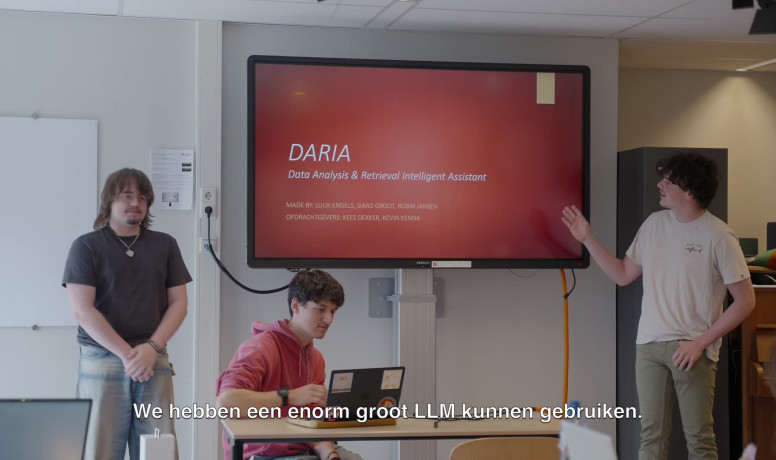
In the second phase, experiments were carried out with the SURF Research Cloud involving lecturers and students from two educational institutions. The aim was to discover, based on specific practical situations faced by lecturers and students, how a supportive (cloud) infrastructure could help, and where bottlenecks still exist. Discussions were also held and meetings organised with stakeholders to map out scenarios. These scenarios provide different perspectives, such as: what would happen if the sector took no action or, conversely, invested in a supporting (cloud) infrastructure, and what that would mean for the sector and the institutions themselves.
As the final step in the project, we are looking at what needs to happen after the project concludes. It must, of course, be financially viable to roll out this infrastructure across the sector. That is why we want to engage the relevant stakeholders with the project’s findings.
Want to find out more?
Read more about the progress of this project on SURF Communities (in Dutch):
- Docenten missen infrastructuur voor goed, veilig, schaalbaar en toekomstbestendig AI- en data-onderwijs
- Behoefte aan rekenkracht en software groeit niet alleen bij IT- en AI-opleidingen
- Wat als we geen actie ondernemen richting goed, veilig, schaalbaar en toekomstbestendig AI- en data-onderwijs? Een paar scenario's
- Cloudinfrastructuur voor onderwijs: een experiment
Questions or ideas?
Please contact Karianne Vermaas via karianne.vermaas@surf.nl